https://www.youtube.com/watch?v=G_PewocndDQ
This is the link to my video on the Axolotl. Thanks to Colleen for the awesome narration!
Wednesday, March 16, 2016

Monday, March 14, 2016
The Martian Quest
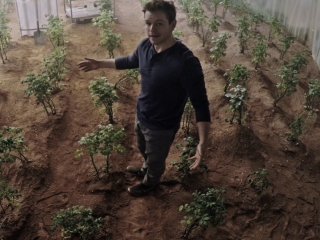
In the movie, The Martian, Mark Whatney faces many different things on mars. These three challenges are a constant supply of oxygen, a steady supply of water to drink for the human body, and a good supply of food. Mars makes all of these hard to do because it is very cold (This keeps water frozen most of the time), the soil is mainly composed of iron, there are constant dust storms, and the air is not full of oxygen (Or if it is then it also has other chemicals in it to make it to where humans can't breathe it). Earth makes up for all of these challenges with the great temperature depending where you are on Earth, the soil also depends on where you are and even though it has a lot of nitrogen in it the plants actually use nitrogen, and the temperature (Again depending where you are) is great, which makes the water not freeze. Whatney, in the movie, overcomes these challenges in a couple different ways. For the temperature problem, he actually does most of his work inside of the station that was left on the planet. Inside the station, he takes the crew's excrement and the martian soil and mixes it to make a more fertile soil. He uses this soil to grow the potatoes in.


He then creates a little set up in the middle of the potatoes which uses excess hydrogen in the atmosphere and creates a way for water to come from it. This water is used for him and to water the potatoes that he found were on the station. In the future, I predict, that humans will already have many machines that can generate or break down many chemical compounds so that the base elements can be used and that could create a way for oxygen to be created easier on other planets. Also, by the time that they have the technology to do that I suspect that they will have many pressurized stations to form colonies on Mars.

Jurassic Park- Hollywood Critic
This is a critical review of the science and research behind Jurassic Park. The first thing that I want to talk about and point out is that the Tyrannosaurus Rex can see things that do not move. Researchers, after watching the film, had found interest in the subject and began research on it. They have found out that the T-Rex possibly had better eyesight and depth sensory than modern day raptors. More information can be found here. The next thing that I want to talk about is how most of the dinosaurs from Jurassic Park are not even from the Jurassic time era. Most of the dinosaurs that are actually shown in the first movie are actually from the Cretaceous time period. Some of the dinosaurs that are actually from the Cretaceous period include the T-Rex, the Velociraptor, the Spinosaurus (From Jurassic Park III), the Masosaurus (From Jurassic World), and a dinosaur that is actually from the Triassic era, the Camptosaurus (Form Jurassic Park II). One of the people that worked on Jurassic Park had responded to an interviewer on why it was called Jurassic Park and not something like Cretaceous Park is that it was just a name and could be named anything.
Where in the world?- See the World Quest Chain
The first things that I would look for are the types of trees in the area. Trees grow in set climates and conditions and if you look at a certain type of tree then you can automatically, as long as you know something about the trees, tell what kind of area you are located in. Like, for example, Aspens. Aspens are a tree that is usually found near the North of temperate forest areas and north of the Northern hemisphere. The second thing I would look for, if there were any, is cars. Since this quest did say there were no people around and not cars. You can tell what part of the world you are in often by which side of the car the driver's seat is on. If it is on the right side of the car then that limits to where you are. Try to find more than one car that is like that though so that you can make sure it is not “someone from out of that place”’s car. Also, if the cars were to just be left on the street and they were abandoned then that could hint to you being in the UK, Ireland, or a couple other countries. The third thing that I would look for is the landscape of the area you are in. The landscape around the world is very different in certain parts. Also, the landscape includes looking at what type of ground is underneath you because sand could lead to you being in a desert. Rocks are also a big part of where you are at. If the rocks around the area are sedimentary then that could mean that there is a lot of sand around the area and could lead to a desert type biome. Igneous rocks could lead to you assuming you are near a volcano. Now, to talk about the stars. Stars are located directly above some areas so that tells you where you are. Like Polaris, the North Star, sits directly above the North Pole. So if you look up into the sky and find Polaris, it is always above the Big Dipper, then you will be able to find where you are in the world.
The Sixth Extinction- Extinction Quest Chain
This is the list of criteria that I would go over if I had to consider an animal needed to be saved.
1- Does it contribute to keeping the population of another organism low?
2- Does it provide something to another organism? (E.g. Spider's silk, cow milk, etc.)
3- Does it critically impact the environment?
4- Does it support a food chain?
5- Does it keep another animal alive? (E.g. symbiosis, etc)
6- Is it interesting to look at or cute?
Does the Giant Panda fit this criterion? Yes, I think that it does. Basically, I am going on if the animal fits a majority of the criteria. This is the yes/no answers to the criteria.
1- Yes (Bamboo)
2- Yes (Research on the lifestyle of most other bears that share its lifestyle)
3- Yes (It keeps the fast spreading bamboo at a low)
4- Yes (It eats bamboo and is one of the only things that do)
5- No (It is the apex of its territory)
6- Yes (Definitely)
The five other animals that I did were Siamese Crocodile, Takhi, Hawaiin Monk Seal, Sumatran Orangutan, and Axolotl.
Their criteria ratings will be listed in the order below as they were just given.
1- Yes (It eats many mammals that drink from rivers it lives in)
2- No (They do not give any resource or material)
3- Yes (It keeps the population low of many animals that live around it)
4- Yes (It eats many fish and mammals)
5- Yes (Symbiosis with some birds allow them to eat from cleaning crocodile's teeth)
6- No (They are scaly and don’t look very friendly)
1- Yes (It eats many plants around its territory)
2- No (They do not give any resource or material)
3- No (It keeps the grasses around its habitat low)
4- Yes (It eats grasses and carnivores eat it)
5- Yes (Apex predators feed off of it)
6- Yes (They look like a fat horse)
1- Yes (It eats much fish in the sea around it)
2- Yes (They provided their hide, a reason for their extinction)
3- No (It is not that big of a contributor to the decline of fishes populations)
4- Yes (It eats many fish and sharks, did, eat it)
5- Yes (It was a primary food source of some sharks)
6- Yes (It is blubbery and is really sleek looking)
1- Yes (It eats many berries and keeps the berries from spreading more rapidly)
2- Yes (It has homes in the trees that another animal can use after them)
3- Yes (It keeps the trees at a limit and it provides homes for other animals)
4- Yes (It eats many of the berries and fruits in the forest)
5- No (They are very independent)
6- Yes (They are red and furry)
1- No (They are very solitary and docile creatures)
2- Yes (They provide many different types of research to science)
3- Yes (It was the apex predator of its environment and kept fish populations down)
4- Yes (It consumes many small fish and birds eat it)
5- Yes (Many birds, including Herons, eat it)
6- Yes! (Basically a Mudkip, adorable)
Now I am going to be discussing several other things that I am supposed to be talking about. The first thing is why extinction is a problem for human survival. The main reason that I think that extinction is a big problem for human survival is that things that critically support humans, like bees, cows, etc., provide so many resources for humans that they rely on them. The second thing that I need to talk about is why I chose the criteria I chose for above. I chose the first piece of criteria because that is something that all animals should do so that things don't begin to overpopulate (Like humans). The second criteria were because all animals, including humans, should be providing for another animal so that it can survive as well as that animal. The third criteria were chosen because it is similar to why humans should clean up their trash after they do something. This keeps the world prettier and less abundant of a certain resource. The fourth criterion was chosen because if the animal solely eats on a thing and so many other animals also eat that, then that animal does not really need to be there. This is unless there is an animal that eats these animals. The fifth criterion was chosen because most if an animal supports the life of another animal then that boosts both of those animals likeliness of survival and shows scientists what their behavior towards other animals are. The final criteria, if the animal was cute/interesting or not, was put in there because not many people are going to really want to help that animal if they don’t have some reason to like it.
The next thing that I have to talk about is whether the Giant Panda fits the criteria I listed and if it is worth saving. The Giant Panda’s rating for the criteria is at the beginning of this article and on whether I think that the Giant Panda should be saved is, yes, the Giant Panda should be saved. It is an amazing animal and is one of the best animals at keeping the bamboo rates down. The last thing that I have to do is explain why my highest ranked animal is threatened and what we can do to save it. I had three animals that got the same scores on the criteria and out of them I choose to do the Axolotl as the animal I would like to save. The Axolotl is endangered because of pollution of the only place it lives naturally in, the Xochimilco lake. This lake is being polluted because of the city of Mexico that is right beside that has factories that let off very dangerous waste into the lake. The solution I believe would work to save these animals would be to start a clean up in the lake where people will take out animals and clean them off and start to remove the sludge at the bottom of the lake. The factories would also need to have another place to put their waste. The animals could be put somewhere safe for them while their home is being cleaned and after it is clean, then they could be put back into the lake.
My notes: Here
Thursday, March 3, 2016
Volcanoes Quest- Natural Disasters Quest Chain
This blog post is about the Yellowstone Volcano at Yellowstone national park and if it is a threat to America. Yellowstone is a volcano that is located close to the top of the United States of America and it has been dormant for a very long time. The last time the volcano erupted was in 1350 B.C. This eruption did not let out an actual explosion, though. The last actual explosion of the volcano was 174,000 years ago and the last time lava flowed from the volcano was 70,000 years ago. To answer the question if it would be devastating to humanity if it were to explode, yes, it would be. The explosion would cover up to 2/3 of America, the whole continent, in ten feet of ash. Yellowstone national park is located inside and around the caldera of Yellowstone. If you don't know, a caldera is a crater left over from a volcanic explosion, with Yellowstone's case being over a couple thousand years ago. Scientists have stations around Yellowstone national park that monitor the activity of the volcanoes. These scientists include seismologists, volcanologists, and more. They are all studying the crust and the mantle of the Earth and everything on top of it to get the most accurate amount of years it will be until the next eruption of the Yellowstone volcano. So far, it is expected to be longer than 1,000 to 10,000 years from now. There are also often 100-300 earthquakes, which show that there is still activity in the area under and around Yellowstone and that means that the volcano is still just dormant and will likely erupt once pressures get high enough and it will be devastating.
Here are my notes: Click here
Resources:
http://www.nps.gov/yell/learn/nature/volcanoqa.htm
http://www.idahostatejournal.com/members/doomsday-could-yellowstone-park-s-supervolcano-erupt-soon/article_4a20351e-f6ec-11e4-aefc-073e37e89022.html
http://www.ryot.org/supervolcano-yellowstone-volcano-will-it-erupt/765673
Here are my notes: Click here
Resources:
http://www.nps.gov/yell/learn/nature/volcanoqa.htm
http://www.idahostatejournal.com/members/doomsday-could-yellowstone-park-s-supervolcano-erupt-soon/article_4a20351e-f6ec-11e4-aefc-073e37e89022.html
http://www.ryot.org/supervolcano-yellowstone-volcano-will-it-erupt/765673
Scorched Earth- Interstellar Quest Line
The scenario I think that is the most likely to cause the biggest threat to survival is the global warming scenario. I think that this is the most realistic scenario because humans, really ever since the late 90's, have been pumping out more and more Co2 emissions through the advancement of factories and industries. "It is clear from the extensive scientific evidence that the dominant cause of the rapid change in the climate of the past half century is human-induced increases in a number of atmospheric greenhouse gases, including carbon dioxide (CO2), chlorofluorocarbons, methane, and nitrous oxide." This quote is from the American Meteorological Society and is talking about what humans have been putting into the air by creating all of the new technologies we have today. This quote by the AMS was from 2012. It has been almost 4 years and people have still not started to try and fix anything with global warming. My second reference is from 2001. This again shows how long we have been dealing with global warming. "Climate change is real. There will always be uncertainty in understanding a system as complex as the world’s climate. However, there is now strong evidence that significant global warming is occurring. The evidence comes from direct measurements of rising surface air temperatures and subsurface ocean temperatures and from phenomena such as increases in average global sea levels, retreating glaciers, and changes to many physical and biological systems. It is likely that most of the warming in recent decades can be attributed to human activities." That reference is from 11 different science academies together. The U.S. National Academy of Science is just one of these academies.The last reference is from theEnvironmental Research Letters by J. Cook. This is from Volume 8 Number 2. ". . . global climate change together with increasing direct impacts of human activities, such as fisheries, is affecting the population dynamics of marine top predators." This volume of letters is from 2013. A solution that I think would work is if humans stopped destroying the forests of areas on the Earth where humans have been too and then start regrowing plants and cleaning up areas that humans no longer use.
Subscribe to:
Posts (Atom)